For anyone applying to jobs in Bahrain, it's worth understanding the CPR (Central Population Register) card — Bahrain's residency ID — and the two agencies involved in the process.
What's Different About Bahrain
Bahrain involves two separate authorities: the LMRA (Labour Market Regulatory Authority) handles the work permit, and the NPRA (Nationality, Passport and Residency Affairs) handles the residence permit. After arriving in Bahrain, you complete a medical/biometrics, then receive your CPR card, which officially lets you live and work there.

What to Highlight for Bahrain in Your CV
- Financial/banking sector experience (if relevant) — Bahrain is a Gulf financial hub with more white-collar roles
- Hospitality/retail experience — also a major sector in Bahrain
- Clear trade classification — matters for the LMRA process
How Resume Arab Helps
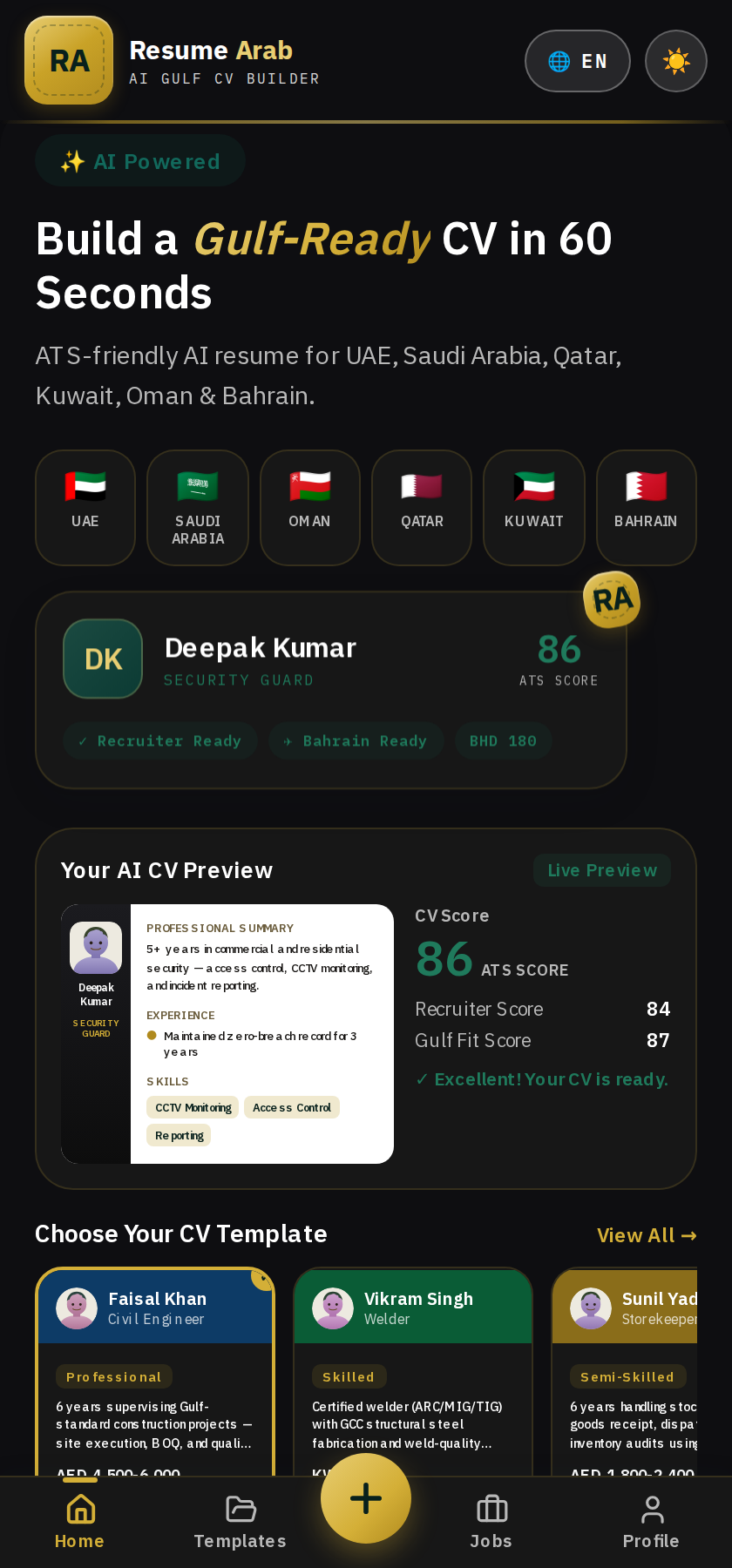
The AI writes content specific to Bahrain-relevant trades (finance-support roles, hospitality, retail, construction) — automatically in an ATS-friendly format.
FAQs
Q: Do I need to apply separately for LMRA and NPRA? This is an employer-side process — the two agencies coordinate; the candidate doesn't apply separately, the process follows after a job offer.
Q: Does Bahrain have more white-collar or blue-collar jobs? Both — Bahrain is known for financial/professional roles, but there's also demand in construction, hospitality, and retail.
Build your Bahrain-ready CV now — with AI, in 60 seconds.